Which Direction Should Ceiling Fan Turn To Blow Air Down
Which Direction Should Ceiling Fan Turn To Blow Air Down. You should be able to feel a breeze when standing directly under it. Switching your fan’s direction counterclockwise will push cool air down and make the room feel cooler.
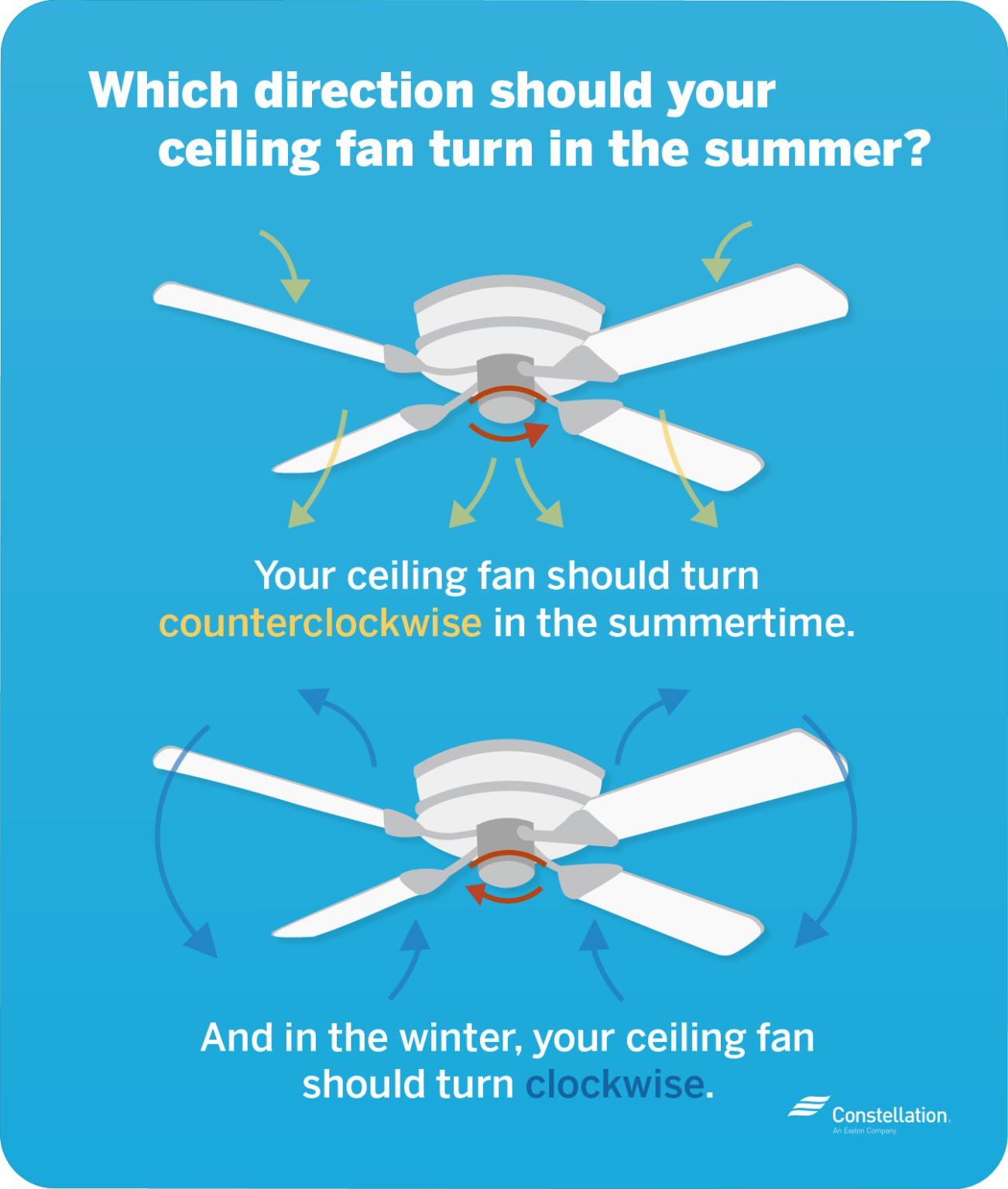
Ceiling fans used in winter should rotate in “reverse,” or clockwise, to create an updraft that draws cold air up to the. Ceiling fan direction in winter in the winter, ceiling fans need to spin clockwise on low speed (any faster and you’ll start to feel a cool breeze). The normal, or forward, position of a ceiling fan is to move in the counterclockwise direction because most ceiling fans are designed to produce a.
The Fan's Gentle Updraft Will Force Any Warm Air Concentrated Near The Ceiling To Circulate Down And Around The Living Space.
The gentle updraft pushes warm air, which naturally rises to the ceiling, down along the walls, and back to the floor. Running the blades in that direction ensures that the air blows straight down. The direction should be changed as the seasons change.
However, Most Experts Say To Circulate The Air Upward In The Winter.
Remember that warm air rises. A ceiling fan that spins clockwise will draw cooler air up and force warmer air near the ceiling down. Stirring up the air in a room with a ceiling fan keeps air evenly distributed and therefore, more even temperature thoughout a room.
(As Quiet As Any Bathroom Fan Can Be Expected.
During the winter, you do not want the fan to blow. Switching your fan’s direction counterclockwise will push cool air down and make the room feel cooler. As a rule, ceiling fans should rotate “forward,” or counterclockwise, in the summer to create a downdraft.
Conversely, Ceiling Fan Needs To Spin Clockwise During The Winter Months.
When turned on no matter what setting it is on high,med or low. Most fans will run in a counterclockwise direction in the summer months, blowing the air downward. This is the best ceiling fan direction for air conditioning since it makes the air feel.
Move The Switch And Turn The Fan Back On.
Most people think of this as a way to bring the warmer air near the ceiling back down into lower half of the room, where the people are. The downdraft pushes air toward the floor, creating a breeze that provides a cooling (wind chill) effect. This movement will push up the lower air and pull down the warm air to the sides of the room, improving heat distribution.

0 Comments