Calculate Deadweight Loss Price Ceiling
Calculate Deadweight Loss Price Ceiling. The government sets a limit on how low a price can be charged for a good or service. Using the graph below, shade in the deadweight loss when a price ceiling of $10 is imposed in the market for aa batteries, and then calculate the amount of the deadweight loss.
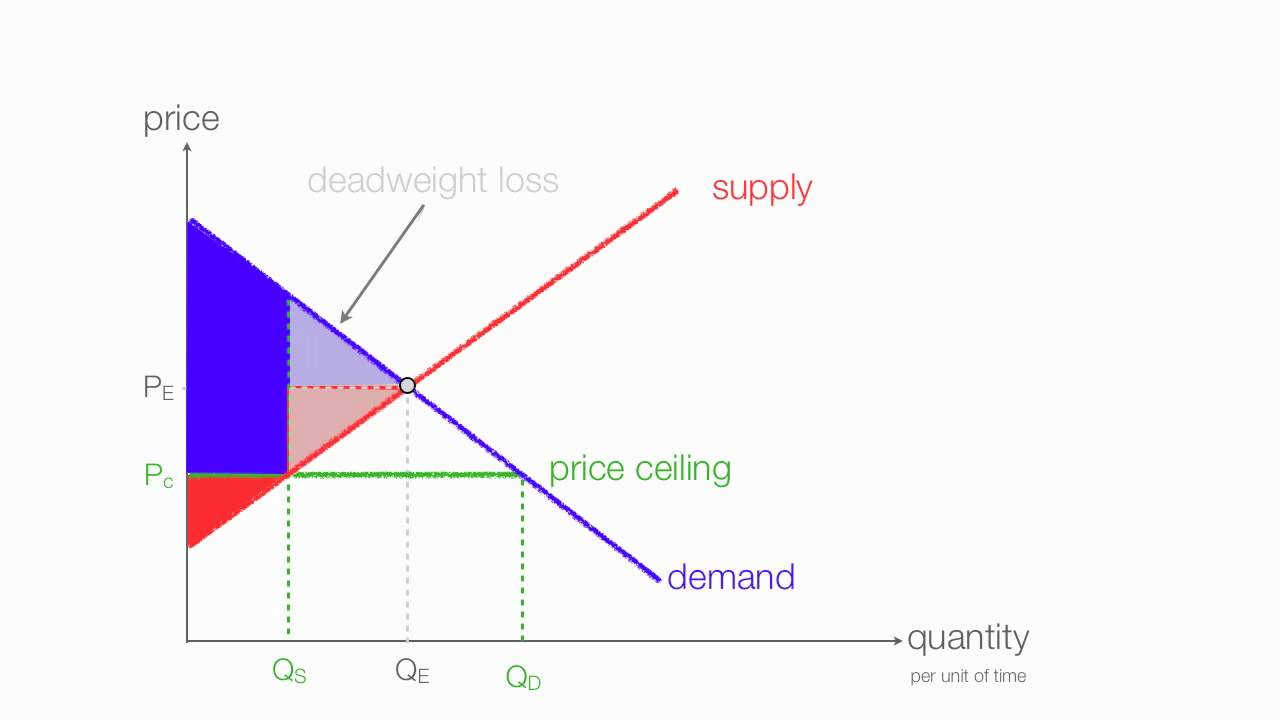
A deadweight loss is a cost to society created by market inefficiency, which occurs when supply and demand are out of equilibrium. File history click on a date/time to view the file as it appeared at that time. To calculate deadweight loss, we must find the area highlighted in grey below which refers to both the deadweight loss to the consumer and the.
Taxes And Price Controls Are What Cause Weight Loss To Society.
It is important to know both how high the demand and the price are and to calculate deadweight loss when calculating it. Deadweight loss (dwl) = (p n − p o) × (q o − q n) / 2. Deadweight loss is calculated using the formula given below.
Draw A Price Ceiling At $12.
Use the tool provided 'dwl' to illustrate this area on the graph. Hence, new price will be=120+34=155 (rounded off to nearer amount) (p2) and the new quantity is=450 (q2) calculation of deadweight loss can be done as follows: We can calculate deadweight loss by finding the area shaded below in grey.
The Graph Shows A Shift In Demand With A Price Ceiling.
The amount of shortage at this price is the deadweight loss is b. As for producers, it is a loss. Deadweight loss = ((pn − po) × (qo − qn)) / 2.
The Original Intersection Of Demand And Supply Occurs At E0.
Q0 equals the quantity of available units before the price ceiling and q1 equals the quantity available afterward. So here, when we calculate deadweight loss for this example, we get a deadweight loss equal to 1. A) there will be no deadweight loss with the price ceiling.
The Government Sets A Limit On How Low A Price Can Be Charged For A Good Or Service.
We’ll use the p1, p2, and q1 to calculate the percentage (as opposed to q2). Measure the price of the good a the current quantity and optimal quantity. C) there is insufficient information to determine which policy will have the large deadweight loss.

0 Comments