Deadweight Loss And Price Ceiling
Deadweight Loss And Price Ceiling. A deadweight loss, in economics, can be caused by multiple policies and inefficiencies within a market.some of those causes are listed below: The market is experiencing shortages.
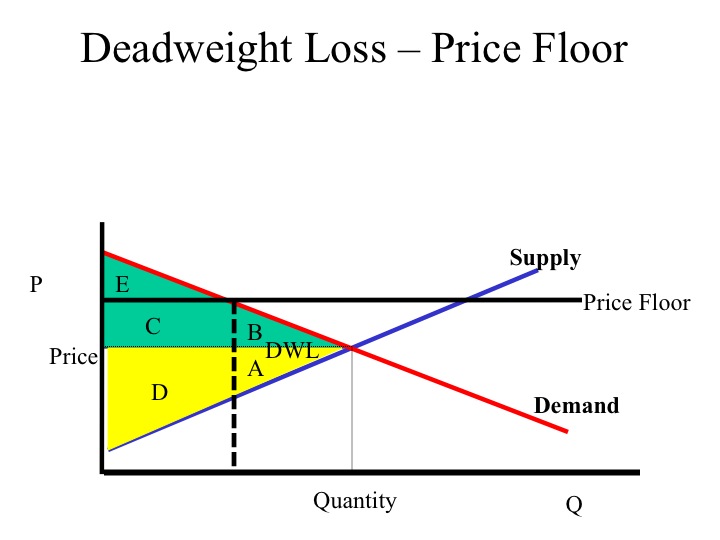
As such, a possible method is for them to impose a price ceiling. In terms of price ceilings, some parts of producer surplus are converted to consumer surplus. A price ceiling will tend to result into deadweight loss since at any price below the market equilibrium price, quantity supplied will be below the market equilibrium quantity supplied, resulting a loss of surplus to producers.
These Cause Deadweight Loss By Altering The Supply And Demand Of A Good Through Price Manipulation.
Qn = the product's quantity that was requested after taxes, price ceiling and/or price floor is introduced. There are many price ceilings that can result in deadweight losses, including price controls and rent controls; D) consumer surplus may either increase or decrease with a price ceiling.
A Deadweight Loss Is Determined By Assessing The Loss Of Production And The Higher Price When The Tax Alters The Market Equilibrium.
Though, they are different from each other. In other words, deadweight loss indicates that the economic welfare of society is not at its optimum level. Deadweight loss is intact as the price ceiling has no effect less than the free market price and greater than the optimal price :
A) There Will Be No Deadweight Loss With The Price Ceiling.
How are price ceilings and deadweight loss created? To calculate deadweight loss with a price ceiling, we write w d = (q q ) 2 (p d p ) where p d is the demand price, the price on the demand curve at q = q. A price ceiling set below the equilibrium price in a perfectly competitive market will result in a deadweight loss because it reduces the quantity supplied by producers.
Deadweight Loss Is Created By:
Price ceiling can cause deadweight loss while price floor causes market stagnation. Deadweight loss = ( (pn − po) × (qo − qn)) / 2. Why does a price ceiling usually result in a deadweight​ loss?
The Original Intersection Of Demand And Supply Occurs At E0.
Q0 equals the quantity of available units before the price ceiling and q1 equals the quantity available afterward. P* shows the legal price the government has set, but mb shows the price the marginal consumer is willing to pay at q*, which is the quantity that the industry is willing to supply. Producers are only willing to supply fewer goods (q1) than they should (qe) because they have to bear lower prices.

0 Comments